- A-6, Main Service Road,New Usmanpur, North East Delhi - 110053
- +91 9069689291
Industrial tool maintenance, increase tool life
19
Feb
Industrial tool maintenance, increase tool life
Industrial tools aren’t just line items on a budget—they’re the backbone of your daily grind. Whether you're on a construction site or a manufacturing floor, a failed tool doesn’t just mean a repair bill; it means a dead stop in productivity.
High-quality tools are built to last, but they aren't invincible. If you want to get the most "bang for your buck" and keep your operations running smoothly, a little bit of proactive care goes a long way. Here is how you turn "maintenance" from a chore into a competitive advantage. --
1. The "Post-Shift" Wipe Down
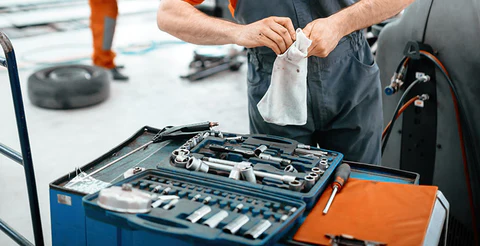
Think of this as the cool-down after a workout. At the end of the day, your tools are covered in the "enemy": grit, grease, and moisture.
-
The Fix: A simple two-minute wipe-down with a clean cloth prevents debris from settling into moving parts. For power tools, a quick blast of compressed air can clear out motor vents before dust turns into a permanent clog.
2. Don’t Wait for the "Snap"
We’ve all seen it—that tiny crack in a handle or a slightly frayed cord that we ignore because "it still works." That’s a gamble you’ll eventually lose.
-
The Fix: Build a "look-over" into your weekly routine. Catching a loose screw or a dull blade today prevents a catastrophic (and expensive) failure next Tuesday.
3. Friction is the Enemy
If it moves, it needs to slide. Metal-on-metal friction creates heat, and heat kills tools.
-
The Fix: A quick drop of the manufacturer-recommended lubricant on hinges and gears keeps everything fluid. Just remember: more isn't always better. Over-lubricating can actually attract more dust, so follow the manual.
4. Respect the Environment
You wouldn't leave your laptop out in the rain, so why treat a professional-grade drill any differently? Rust is the "silent killer" of industrial equipment.
-
The Fix: Invest in decent racks and climate-controlled cabinets. Keeping tools off the floor and away from humidity isn't just about being "neat"—it’s about protecting the integrity of the metal and the electronics inside.
5. Use the Right Tool for the Wrong Job? Don't.
We’ve all used a screwdriver as a pry bar at least once. But habitual misuse is the fastest way to the scrap heap.
-
The Fix: Proper training is key. Ensure your team knows the limits of their gear. Using a tool for its intended purpose isn't just about safety; it’s about making sure that tool is still there for you a year from now.