- A-6, Main Service Road,New Usmanpur, North East Delhi - 110053
- +91 9069689291
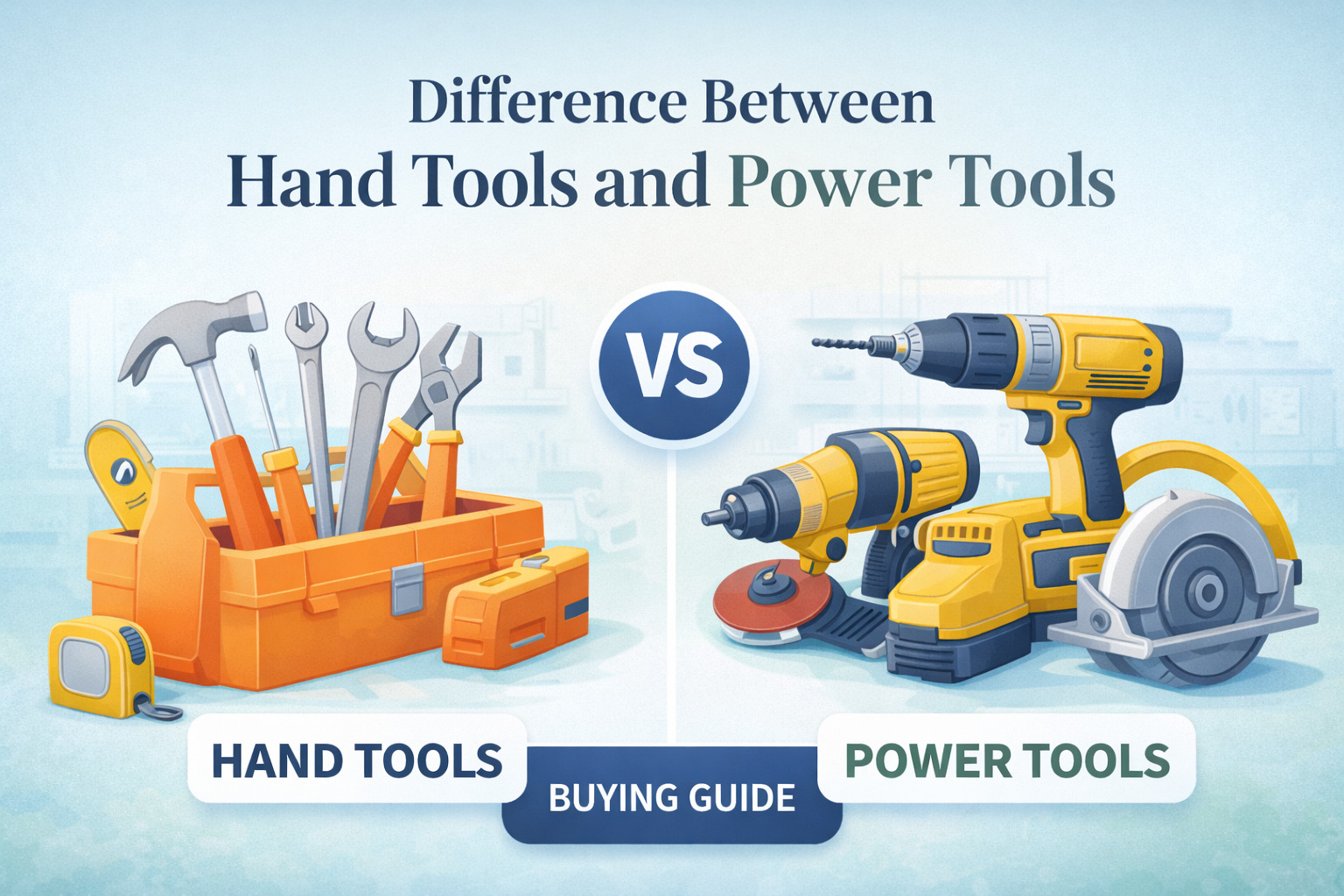
Difference Between Hand Tools and Power Tools | Buying Guide
31
Jan
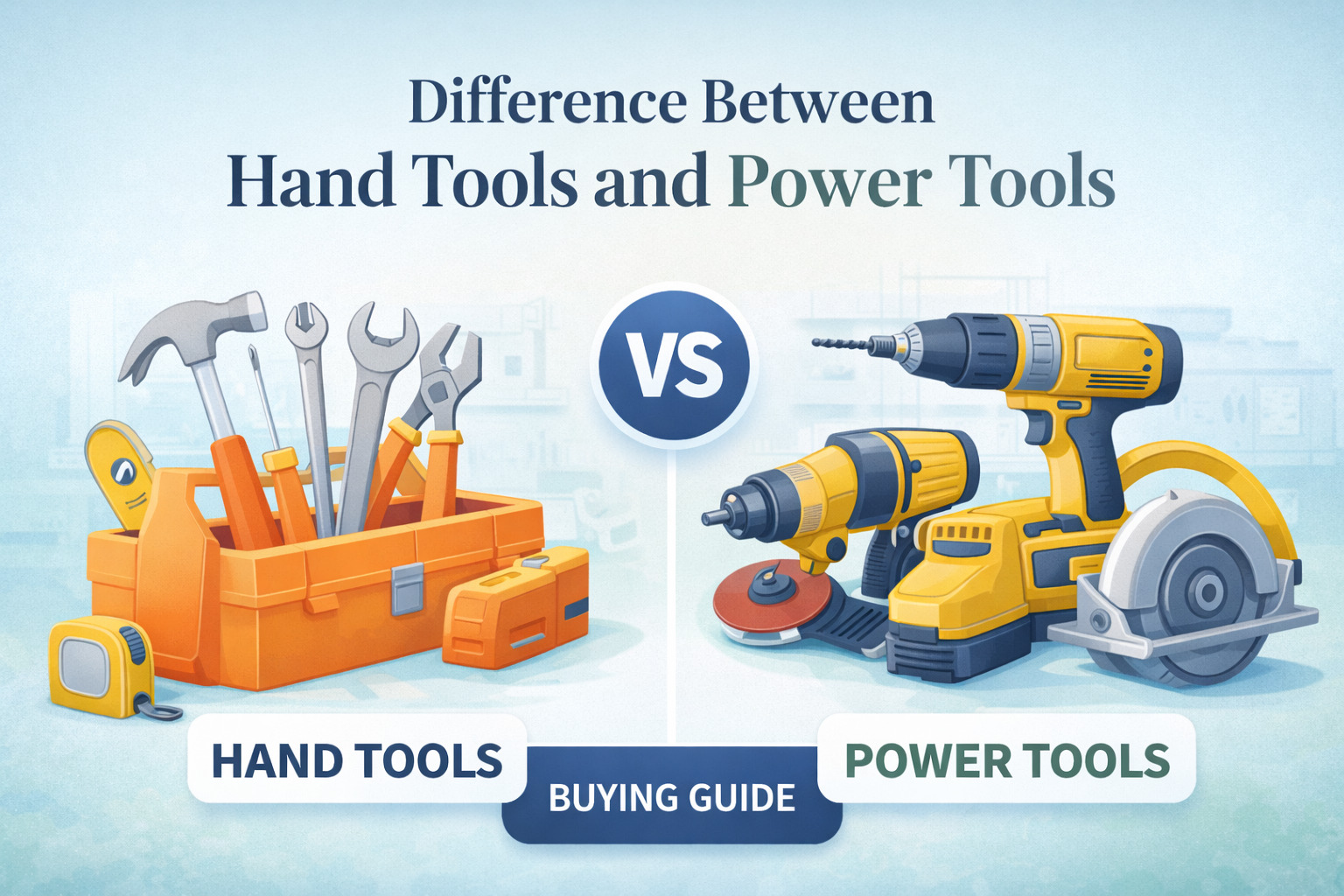
Difference Between Hand Tools and Power Tools | Buying Guide
Whether you’re an ITI student just starting your journey or a seasoned pro in the workshop, your tools are an extension of your hands. But a common crossroads everyone hits is: Do I go old-school with hand tools, or do I upgrade to power tools?
It’s not just about "fast vs. slow"—it’s about choosing the right partner for the job. Here is a human-friendly breakdown to help you build a toolkit that actually works for you.
1. Hand Tools: The "Finesse" Workers
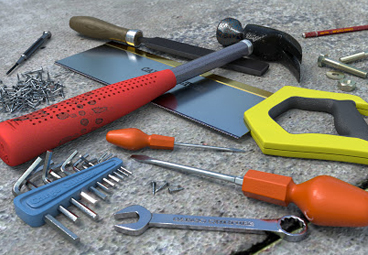
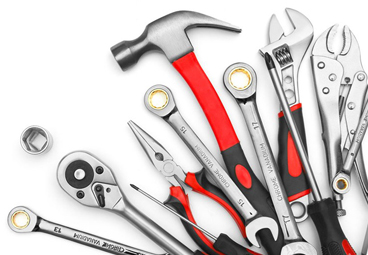
Hand tools are the foundation of any trade. They rely entirely on your muscle and your mind. There’s a certain satisfaction in the "click" of a well-fitted wrench or the "tap" of a hammer that you just don't get with machinery.
-
The Vibe: Complete control. Hand tools don't have a "mind of their own," so they are perfect for delicate tasks where one wrong move could ruin a part.
-
Best For: Students learning the basics, precision fitting, and quick "grab-and-go" fixes where you don't want to hunt for a power outlet.
-
The Upside: They never run out of battery, they're affordable, and they last a lifetime if you treat them right.
2. Power Tools: The "Heavy Lifters"
Power tools are the "force multipliers." They take the physical strain out of the job and replace it with electricity or battery power.
-
The Vibe: Pure efficiency. What takes 10 minutes with a handsaw takes 10 seconds with a power saw.
-
Best For: Repetitive tasks (like drilling 50 holes), heavy-duty construction, and professional workshops where "time is money."
-
The Reality Check: They require more respect. You need proper safety gear and training because things happen a lot faster when a motor is involved.
Hand Tools vs. Power Tools: The Cheat Sheet
| Feature | Hand Tools | Power Tools |
| Power Source | Your own energy (and coffee) | Electricity, Battery, or Air |
| Learning Curve | Easy for beginners | Requires safety training |
| Portability | Toss them in a bag and go | Heavier; needs chargers/cords |
| Precision | Excellent for "feel" | Excellent for "consistency" |
| Cost | Pocket-friendly | An investment |
Which One Should You Pick?
You don’t actually have to choose one over the other. In fact, the best technicians use a "Hybrid Approach."
-
Start with Hand Tools if you are a student. You need to "feel" the material to understand how it reacts. You can't learn the nuances of a screw's torque if you use an impact driver for everything.
-
Level up to Power Tools once you know the basics and your workload increases. If you find yourself doing the same physical motion over and over until your arm hurts—it’s time to buy the powered version.
Why "Cheap" Tools Are the Most Expensive
Whether it’s a simple plier or a high-end rotary hammer, quality is your best safety feature. A cheap wrench that slips can skin your knuckles; a cheap power tool that shorts out can do much worse.
This is why professionals tend to skip the "bargain bin" and source from specialized places like IndustrialTools.in. When you buy industrial-grade:
-
Safety is baked in: The tools are built to handle the heat and pressure of a real workshop.
-
Accuracy is guaranteed: A professional-grade try square is actually square; a professional drill bit doesn't wobble.
-
Longevity: You buy it once, rather than replacing it every three months.
Final Word
Don't just buy the cheapest thing you see. Invest in tools that make you a better craftsman. Whether you need the precision of a hand file or the raw power of an angle grinder, make sure it's a tool you can trust.
Call: +91 9069689291